Believe it or not, January, usually the coldest and dreariest month of the year, is extremely important for the spring gardening season. There are seeds that need to be started, garden beds or plots that need to be prepared, and this is typically the time you plan the crop arrangement and rotation of that garden. The seeds that we start in January are all pepper varieties, tomatoes, onions, various herbs, lettuce, and some long season melons. These seeds are started indoors or in a controlled environment. Why are these seeds planted so much earlier than the rest of the garden vegetables? Why can’t we just wait until the spring and plant with everything else?
The reason why we plant these particular seeds so early is because of their long germination rates and the longer growing season. If we waited until spring to start these seeds, it’s very likely the heat will kill the plant before it has a chance to produce any fruits or vegetables, or it will bolt. We also try to control the environment in which the seedling is planted by putting a heat mat under the trays to keep the soil warm. This helps with the seed’s germination. We can also put a clear cover over the seed until it sprouts. This will help keep the humidity where it needs to be. We also need to protect the delicate seedlings from pests and/or animals. Birds love seedlings and cats love to dig them up or lay on them.
Terms that you need to be familiar with:
Germination – The time and process of a seed sprouting and growing into a seedling. Germination needs moisture, warmth, and sometimes light.
Heirloom – Any open-pollinated variety of plant that has remained the same for 50 or more years. You can save seeds from these types of plants.
Hybrid (F1, F2, etc) – plants created by crossing two different species or varieties to enhance specific traits such as disease resistance, improved fruit flavor, or larger flowers. Usually, these seeds are easier to grow, but you cannot save seed for future planting because the offspring will not resemble the parent plant.
Open-Pollinated – In nature, these plants are usually pollinated by insects or the wind. Note that if a plant isn’t labeled as a hybrid, you can assume it’s OP.
Nitrogen (N) – Nitrogen is essential for leafy growth, giving your vegetables, flowers, and lawns their lush green color.
Phosphorus (P) – Phosphorus helps with root development and flowering, making it key for strong plants and productive harvests.
Potassium (K) – Potassium boosts overall plant health, helping your crops resist disease and tolerate tough weather.
Soil Ph – A score between 0 and 14 measuring the acidity (0 to 7), neutrality (7) or alkalinity (higher than 7). Lime raises pH and Sulfur lowers pH. Most plants do well in a pH od 6-7.
Seedling – A young plant, especially one raised from a seed and not a cutting.
Natural Fertilizer – made from natural sources—think composted manure, bone meal, or fish emulsion. These products release nutrients slowly, improving soil structure over time.
Harden off – process of exposing seedlings to the outside elements so as not to induce shock or death.
The first few weeks of a seedling’s life is very delicate. You have to water, but not too much. It needs heat, but not too much. It needs light, but not too much. Then when they get too large for their pots, we must harden them off. This involves exposing them to the outside elements a little every day until they can spend a whole day outside all by themselves. It took me a while to learn why I lost so many plants when I first moved the tiny things out to the garden. It was because I did not harden them off. They were used to this perfect environment, and we do not live in a perfect environment. The shock killed them.
Usually when we plant a garden, it is because we want to eat fresh fruits and vegetables. But what about during the cold months when a garden cannot be planted (for the most part)? When planting, you need to determine if you want to plant for just the season so you can enjoy them at harvest time or do you want to store and process them so they can be used throughout the year.
Another thing to think about is the type of seeds you want to use. For the farm, and me personally, we will use open-pollinated or heirloom seeds. Heirloom tends to be the most flavorful but tends to be harder to grow due to its little resistance to bugs and various diseases. Open-pollinated simply means that it is not hybrid and that you can save seeds from the vegetables for the next growing season. These seeds will grow up to look like their parents. Hybrid seeds are typically the easiest to grow because they are bred for disease and pest resistance. You cannot save seed from them, though, because of the many different plants that were used to create this one. The seeds these plants produce will not have offspring that look like their parents.
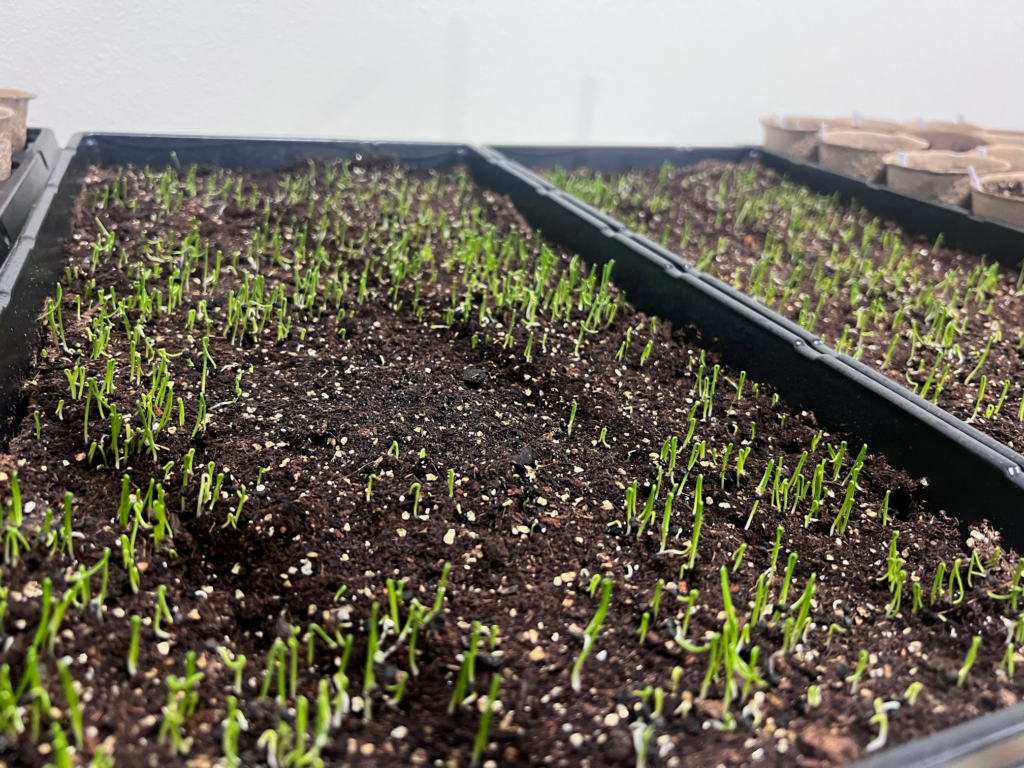
Onion seedlings emerging from the soil